Full Tank Flush
We drain the tank completely, then run fresh water through until it comes out clear. On hard-water units we repeat the cycle. This removes the sediment that shortens hot water recovery and forces the burner to run longer.
Water Heater Maintenance Norwalk CA is how you keep a tank alive past its tenth birthday instead of replacing it at year six. We flush sediment, test the thermostat and TPR valve, and check the anode rod before small problems turn into a flooded garage. If you live in Norwalk and your hot water smells, pops, or runs out fast, book a water heater tune-up in Norwalk this week.
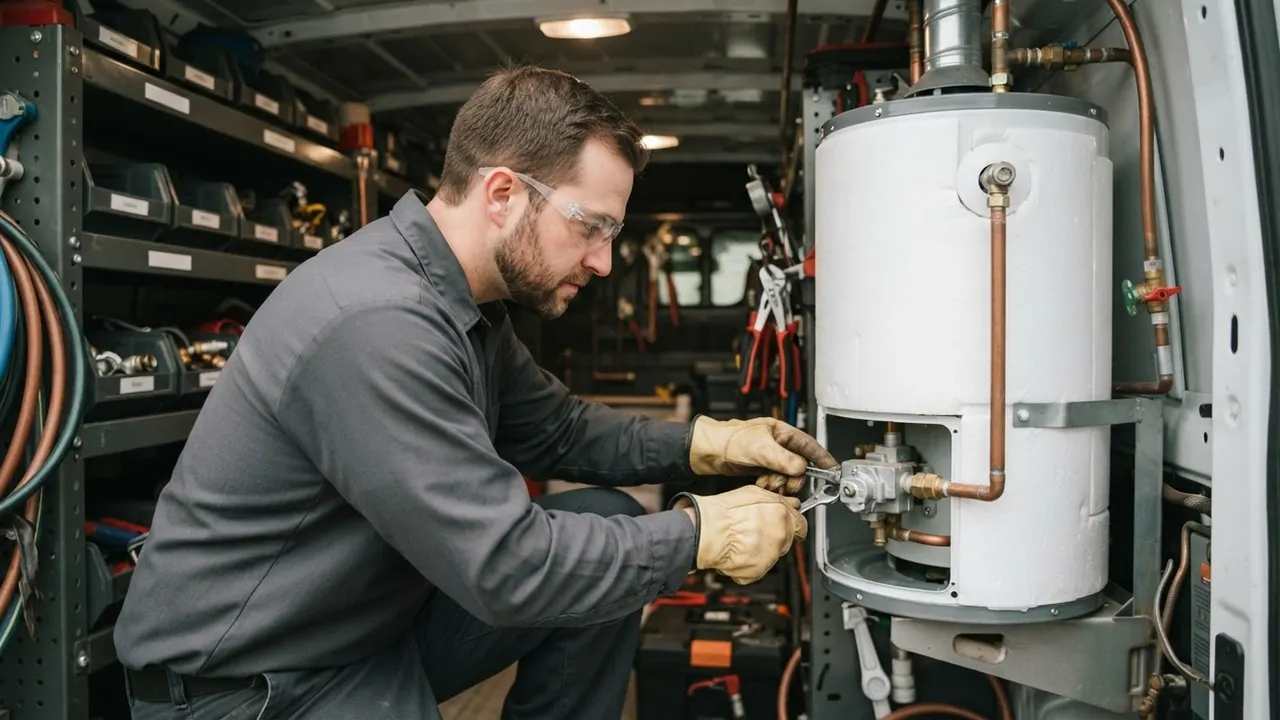
Water Heater Maintenance Norwalk CA is the scheduled service that drains sediment, restores heating efficiency, and verifies every safety component on your tank or tankless unit. We hook up a hose and drain the tank, then flush the bottom until the water runs clear. After that we pull the anode rod, check the dip tube, test the thermostat and heating element with a multimeter, and confirm the pressure relief valve opens and reseats. On gas units we inspect the thermocouple and gas control valve. On tankless models we run a descaling pump through the heat exchanger.
Norwalk sits in Los Angeles County where hard water and older housing stock punish water heaters faster than most owners expect. Sediment builds up in the bottom of the tank, the burner works harder, and your gas bill climbs while the hot water gets shorter. That is why an annual water heater maintenance in Norwalk California matters more here than in softer-water cities. If you have been searching for water heater maintenance near me Norwalk and keep putting it off, the sediment is not waiting with you.
Our standard Water Heater Maintenance Norwalk CA visit covers the full flush, the safety inspection, and a written report. Parts like anode rods, thermocouples, and heating elements are quoted separately if they need replacing, and we always tell you the price before we install anything.
We drain the tank completely, then run fresh water through until it comes out clear. On hard-water units we repeat the cycle. This removes the sediment that shortens hot water recovery and forces the burner to run longer.
We pull the anode rod and measure how much sacrificial metal is left. If it is more than half gone, we replace it. This is the single cheapest step that protects your tank lining from corrosion and adds years of service.
Using a multimeter and thermostat tester, we verify the setpoint matches the actual water temperature and check the heating element for continuity. A drifting thermostat gets flagged before it leaves you with lukewarm showers.
We lift the TPR valve to confirm it opens and reseats, then check the expansion tank charge with a pressure gauge. A pressure relief valve leaking or a waterlogged expansion tank is a safety problem we catch on the spot.
On gas units we test the thermocouple, inspect the gas control valve, and check the burner for soot or blockage. We use a gas leak detector at every connection before we relight the pilot and confirm the flame is clean and blue.
You get a summary of what we flushed, what we tested, what we replaced, and what to watch before the next visit. It also documents the service date for your manufacturer warranty on Rheem, A.O. Smith, or Bradford White tanks.
We kill the gas or power, close the cold inlet, and connect a hose to the drain valve. Draining a 50-gallon tank takes 10 to 15 minutes. You will hear the last of the water gurgle out with a gritty tail of sediment, which is exactly what we are after.
We reopen the cold supply and let it run through the tank and out the hose until the water is clear. On hard-water units we repeat the cycle two or three times. This is the step that removes the calcium and magnesium scale sitting on the burner plate and the heating element.
We pull the anode rod with an element wrench and check how much sacrificial metal is left. If it is more than 50 percent consumed, we swap it on the spot. This is a 15-minute job that costs a fraction of a new water heater and protects the tank lining.
We test the TPR valve by lifting the lever and confirming it reseats without dripping. We check the thermocouple with a multimeter, verify the gas control valve holds its setting, and inspect the expansion tank charge. Anything that fails gets quoted before we touch it.
We refill the tank, bleed the air from the hot side, and relight the pilot. Then we run a hot tap and watch the thermostat cycle. You get a written summary of what we flushed, what we replaced, and what to watch before the next annual visit.
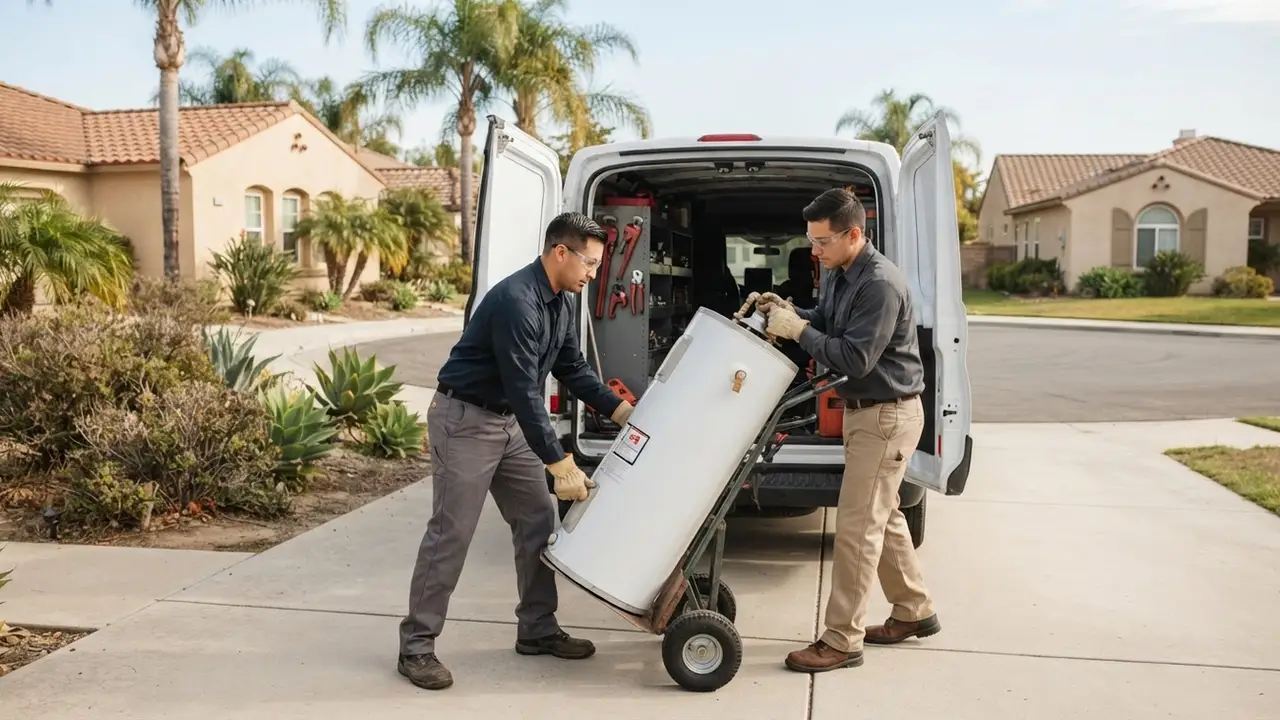
We kill the gas or power, close the cold inlet, and connect a hose to the drain valve. Draining a 50-gallon tank takes 10 to 15 minutes. You will hear the last of the water gurgle out with a gritty tail of sediment, which is exactly what we are after.
We verify heating element continuity and confirm the thermostat setpoint matches actual tank temperature. A drifting thermostat shows up here before it leaves you with lukewarm water.
Used to pull the heating element and the anode rod without stripping the fittings. The right wrench matters on older tanks where the threads have been sitting in hard water for a decade.
For tankless units, we circulate descaler through the heat exchanger to dissolve the calcium that chokes flow. This is the step that keeps a Navien or Rinnai at its rated output.
We check every gas connection on the control valve, thermocouple, and burner supply before relighting. It is a safety step, not an optional one, on any gas water heater.
The gauge confirms system pressure and expansion tank charge. The camera lets us look at the tank bottom and burner compartment without pulling the whole unit.
Every fitting we open goes back with fresh Teflon tape and a new gasket. Reusing old seals on a drain valve or element is how a tune-up turns into a leak.
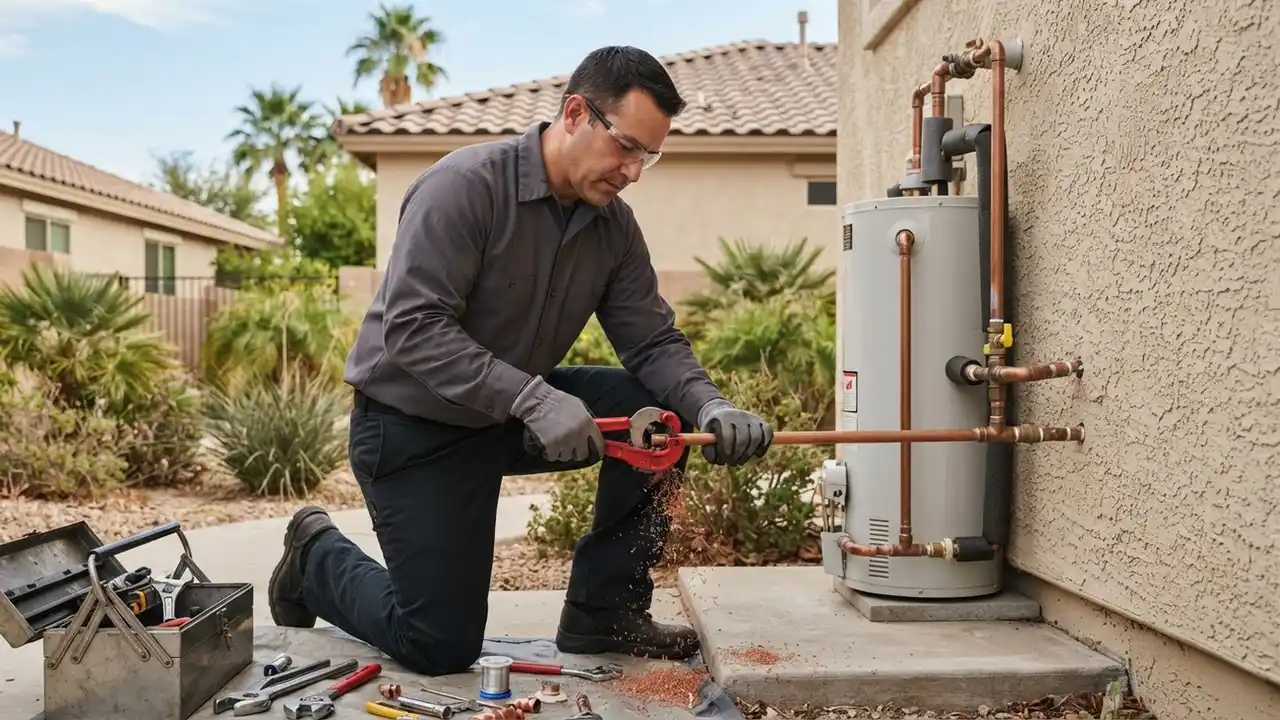
A 50-gallon gas tank in South Norwalk had never been flushed in nine years. Hot water ran out after a 10-minute shower, the burner popped loudly, and the gas bill had crept up over two winters.
After: We drained about two gallons of sediment, replaced a fully consumed anode rod, and reset the thermostat. Recovery time dropped to roughly 20 minutes and the popping stopped. The customer measured a lower gas bill the next month.
Book this service →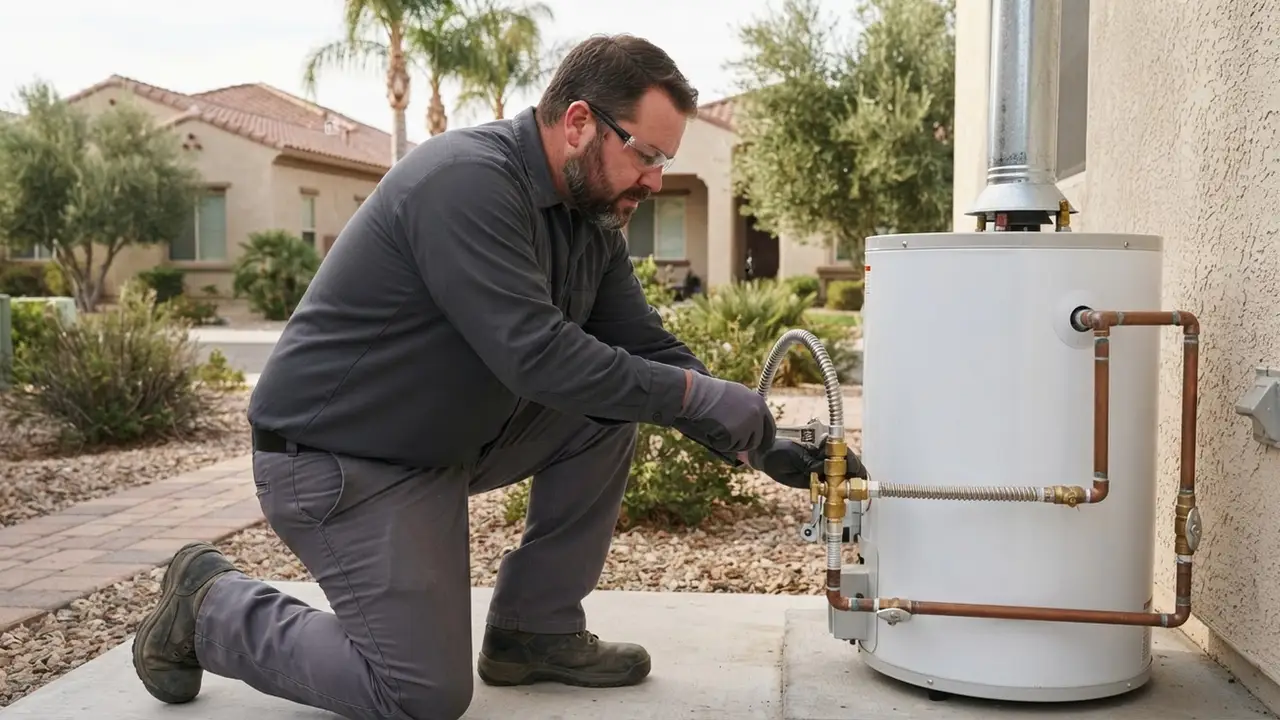
A Navien tankless unit in Oak Hills threw a scale error and cut out mid-shower. The household had never descaled the heat exchanger, and the inlet filter was packed with grit.
After: We ran a descaling pump cycle, cleaned the filter, and verified the flow rate against the manufacturer spec. The error cleared and the unit held its rated output through three back-to-back showers.
Book this service →A Bradford White unit in Downtown Norwalk kept losing its pilot light. The homeowner had relit it four times in a month and was ready to replace the whole tank.
After: We tested the thermocouple with a multimeter and found it out of spec, replaced it, cleaned the burner orifice, and checked every gas connection with a leak detector. The pilot held through a full heating cycle and has not quit since.
Book this service →Most water heater failures start small and give you warning signs weeks in advance. Here are the ones we see most in Norwalk, and what happens if you ignore them.
Ask a pro →We drain and flush the tank until the water runs clear, then check the burner plate for damage. On heavy-scale units we run a second flush cycle. Most customers hear the popping stop the same day and get their recovery time back.
We test the TPR valve, check the expansion tank charge, and inspect the tank bottom with an inspection camera. If it is the valve or the drain, we replace it. If the shell itself is leaking, we tell you straight and quote a replacement.
We test the thermocouple with a multimeter, clean the burner and orifice, and check every gas connection with a leak detector. If the thermocouple is out of spec, we replace it on the visit and confirm the pilot holds through a full heating cycle.
We test the element for continuity, verify the dip tube is intact, and check the thermostat setting against actual temperature. Tankless units get a descaling pump cycle and a flow-rate check. We restore hot water the same visit in most cases.
Once a year for tank units, and every 12 months for tankless models in Norwalk's hard water. If your tank is over eight years old or your water tests hard, we recommend flushing every six to nine months. Annual water heater maintenance in Norwalk CA is the interval that keeps sediment from hardening into scale on the burner plate.
Typical 2026 pricing in this area runs $150 to $280 for a standard tank flush and inspection, and $250 to $450 for a tankless descaling service. Anode rod replacement adds $60 to $120 in parts and labor. The price climbs if we find a failed thermostat, a leaking TPR valve, or heavy scale that needs a second flush cycle.
A full tune-up includes draining and flushing the tank, inspecting and replacing the anode rod if needed, testing the thermostat and heating element, checking the TPR valve and expansion tank, and verifying the thermocouple and gas control valve on gas units. Tankless service adds a descaling pump cycle through the heat exchanger and a sediment filter check.
Native Plumb Masters does, out of Norwalk, California, covering 90650, 90651, and 90652 plus the surrounding Los Angeles County neighborhoods. We are a licensed C-36 plumbing contractor with EPA Lead-Safe certification and same-day slots. Call 562-581-6011 and we will get a truck to your address.
One annual visit keeps your tank efficient, your warranty valid, and your hot water reliable. We are licensed, insured, and we quote the price before we start. Call Native Plumb Masters at 562-581-6011 and get on the schedule this week.
Schedule My Tune-Up 5625816011 →Reach us at 562-581-6011 any time, day or night. We answer live, ask the right questions, and get a technician headed your way. For routine repairs we book same-day slots most weekdays, and emergency calls get priority around the clock.